



Why finding the source matters more than repairing the stain from window leaks in a body corporate
Water appearing around a window naturally makes the window look like the problem. Sometimes it is. But in a body corporate building, the visible leak may be only the place where water finally emerges after travelling through a wall cavity, facade, balcony, roof or another part of the building.
That distinction matters. Replacing sealant or repainting the damaged wall may deal with the symptom without stopping the water. The important questions are where the water is entering, why it is entering and whether the problem is isolated or part of a wider building issue.
What is a window leak
A window leak occurs when water penetrates through or around a window assembly and reaches an area where it should not. The source may be the window itself, a failed seal or flashing, the surrounding wall, defective waterproofing, or the interface between different building elements.
In a body corporate setting, the source also affects who may be responsible for investigating and rectifying the problem. A window, wall, balcony or waterproofing element may form part of a lot or common property depending on the survey plan, the building configuration and the particular circumstances. Or it may be part of the lot itself. Responsibility should not be assumed from the location of the internal damage alone.
Why investigation of window leaks in a body corporate matter
A small stain or occasional drip can appear minor, particularly if it dries quickly after rain.
Repeated water ingress, however, can damage more than paintwork. Over time it may affect plasterboard, flooring, insulation, timber, metal components and surrounding building materials. Dampness may also contribute to mould and persistent odours.
If the underlying cause is not identified, repair costs can increase. The same internal finishes may be repaired repeatedly while deterioration continues behind them. In some cases, windows may ultimately require substantial repair or replacement, particularly where numerous windows or specialised window systems are affected.
Leaks can also create conflict. Owners may disagree about whether the window is defective, whether the water is coming from common property and who should pay for the investigation, repair and consequential internal damage.
A sound technical diagnosis gives the body corporate a better basis for making those decisions. It may also identify wider problems than just the localised leak.
Signs of possible window-related water ingress
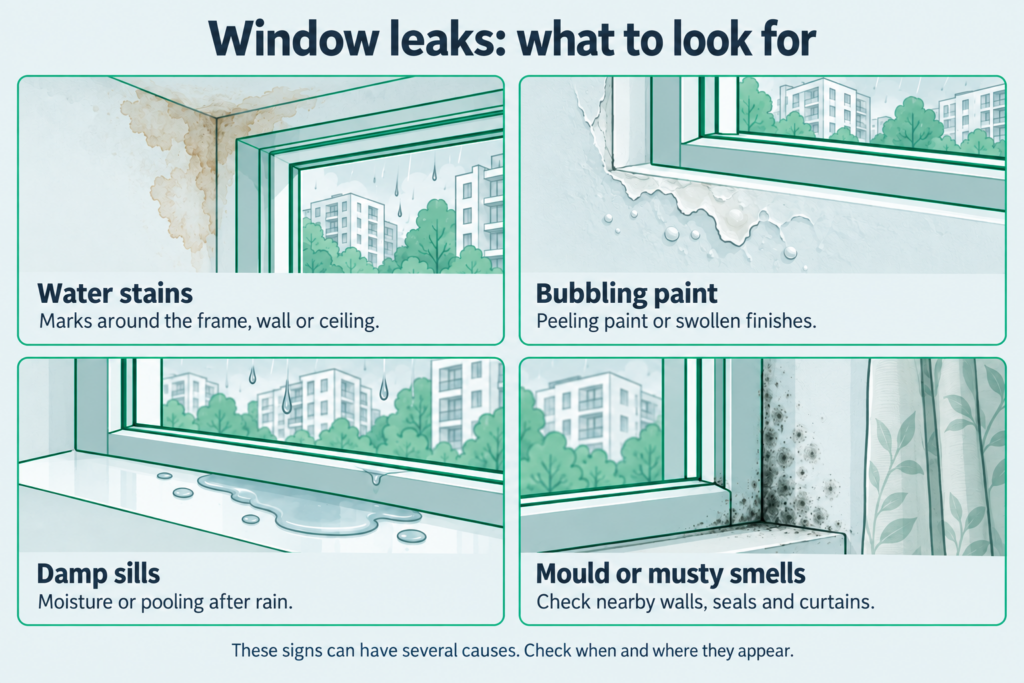
The first indication is not always running water. Common signs include:
- water staining around the frame, reveal, wall or ceiling.
- peeling or bubbling paint.
- swollen or deteriorated plasterboard.
- mould, dampness or a musty smell.
- wet carpet or flooring near the window.
- water pooling on an internal sill.
- corrosion or deterioration around metal components.
- visible gaps or failed sealant around the frame.
- a leak that appears during, or shortly after, rainfall.
The position of a stain does not necessarily reveal the entry point. Water can move sideways or downwards through cavities and materials before it becomes visible. This is why a visual inspection of the affected room alone may not provide the answer.
What can cause water to appear around a window
Possible causes range from routine deterioration to design or construction defects. They include:
- failed seals
- deteriorated sealant
- incorrect window installation
- inadequate flashings
- blocked drainage paths
- cracked render or masonry
- defective waterproofing
- poorly detailed window-to-wall interfaces
The water may also originate somewhere else. A roof, parapet, balcony, terrace, external cladding system, adjacent opening, gutter, downpipe or nearby service may allow water into the building. It may then travel until it reaches the window opening or the internal finish beside it.
Where several windows leak, it becomes especially important to ask whether they share an underlying design, construction, installation or maintenance problem. Treating each window as a separate event can hide the pattern.
Investigate before repairing
The first step should generally be to establish the source and pathway of the water rather than repairing the visible internal damage. Depending on the circumstances, the investigation may include:
- inspecting the window frame, sash, joints and surrounding building elements
- checking sealants, flashings, weep holes and drainage paths
- examining the wall, cladding, render or masonry around the opening
- inspecting roofs, parapets, balconies and terraces above or nearby
- undertaking controlled water testing or other diagnostic testing
- considering whether water is travelling through a wall cavity
- obtaining advice from an appropriately qualified building professional when the cause is unclear
- determining whether the affected element forms part of the lot or common property
Once the source has been identified, the cause can be rectified and the repair tested. Internal plasterboard, paintwork, flooring or other finishes should generally be addressed after the water entry has been stopped and the affected area has had an opportunity to dry.
When should a buyer or owner be more concerned
A single isolated leak with a clearly identified cause and a successful repair may be relatively straightforward. Concern increases when the records suggest uncertainty, recurrence or a broader pattern.
Further investigation may be warranted where:
- the same window continues to leak after earlier repairs
- multiple windows, lots or building elevations are affected
- leaks repeatedly appear after wind-driven rain
- there is evidence of moisture within a wall cavity
- mould, corrosion or deterioration keeps returning
- flashings are missing, damaged or incorrectly installed
- waterproofing or installation defects have been identified
- reports recommend further testing but the records do not show that it occurred
- repairs have addressed damage but not the identified cause
Multiple or recurring leaks can indicate more than routine maintenance. They may point to a systemic problem that affects the likely scope, cost and timing of rectification.
What the body corporate records can reveal
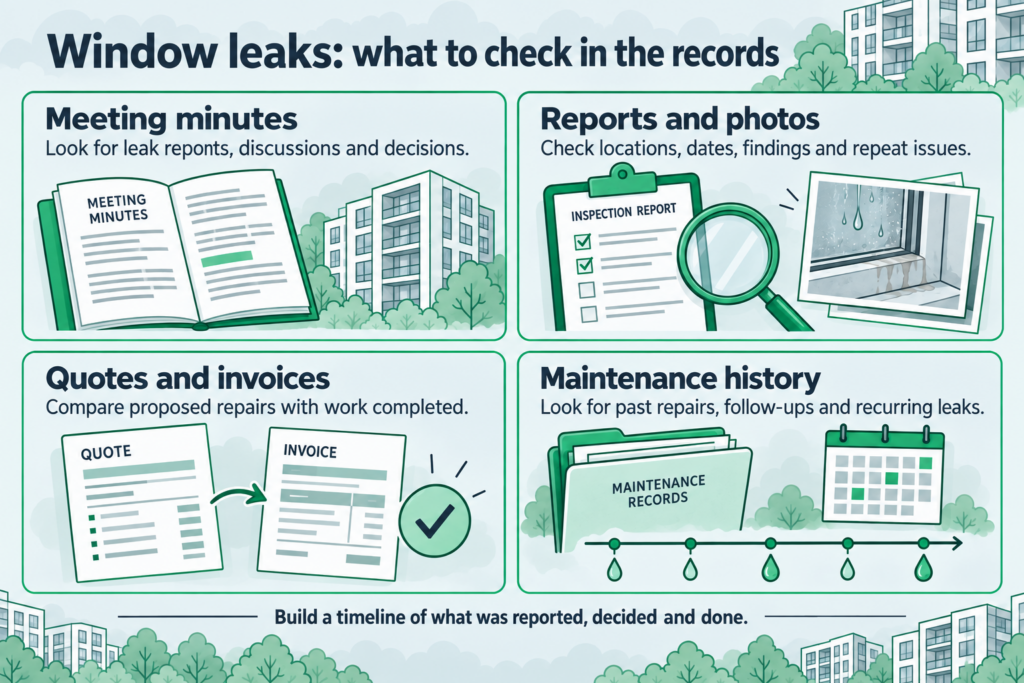
A current complaint provides only one point in the story. Body corporate records can show whether the issue has appeared before, whether it affects other lots and whether previous work actually resolved it.
Useful records may include:
- building, window, waterproofing, roof or defect inspection reports
- engineering or building consultant reports
- committee and general meeting minutes
- complaints and correspondence from affected owners
- photographs or videos taken during rainfall
- water-testing and moisture-testing results
- quotes, scopes of work, invoices and warranties
- records of earlier window installation, replacement or repair
- records of work to surrounding walls, cladding, balconies, roofs or waterproofing
The value lies in comparing the records rather than reading each document in isolation. Repeated complaints after several rounds of sealant work, for example, may suggest that the assumed cause was never established. A report identifying defective flashings is more useful when read alongside later minutes, quotations and invoices showing what was approved and whether the repair was completed.
Who is responsible for the repair
Responsibility cannot be determined simply by saying that windows belong to owners or to the body corporate. The answer depends on the applicable legislation, the registered survey plan and community management statement, the location and nature of the defective element, and the actual source of the water.
The internal damage and the source of the leak may also involve different responsibilities. Potentially insurance may cover the repairs. Before allocating the cost, the body corporate and affected owner should first establish the cause, identify the relevant building element and obtain advice where the boundary or legal responsibility is unclear.
The question to ask
A window leak is a sign of water ingress, not a complete diagnosis. The useful question is not simply, ‘How do we repair the damaged window?’ It is:
Where is the water entering, why is it entering, and is this an isolated leak or part of a wider building problem?
Answering that question before committing to repairs gives owners and the body corporate a better chance of stopping the leak, avoiding repeated expenditure and understanding the significance of what appears in the records.
This article provides general information only. It is not legal, financial, engineering or building advice. The circumstances of every body corporate are different. Obtain advice from an appropriately qualified professional where necessary.