



A body corporate committee decision might be more complicated than people expect.
For example, someone recently told me their committee had declined their request to turn the rooftop into a seating area. The said the reason for the refusal was because the committee was “out to get them”.
I don’t know the building or the committee’s reasons. And I don’t want to imply that personal agendas don’t make their way into body corporate decisions, because they can.
But several other explanations immediately came to mind, and they seemed much more plausible.
To the person making the request, the proposal might look like putting some chairs in an unused space. An experienced committee may see a much longer list of questions:
- Building concerns: Was the roof designed for regular use by people? Could furniture or associated works damage the waterproofing?
- Safety and Insurance concerns: Is access to the roof suitable for multiple poeple. What protection would be needed, and what would the proposed use mean for insurance?
- Compliance concerns: Will changes on the roof impact other systems like fire safety or workplace health and safety?
- Decision-making concerns: Can the committee validly authorise the proposal or will it need to be considered by owners in general meeting?
- Ongoing management concerns: Who would clean and maintain the area?
- Concerns about use: Will this cause noise problems or other impacts that might affect residents?
- Funding concerns: What would investigation and installation cost, and how would those costs fit with existing commitments.
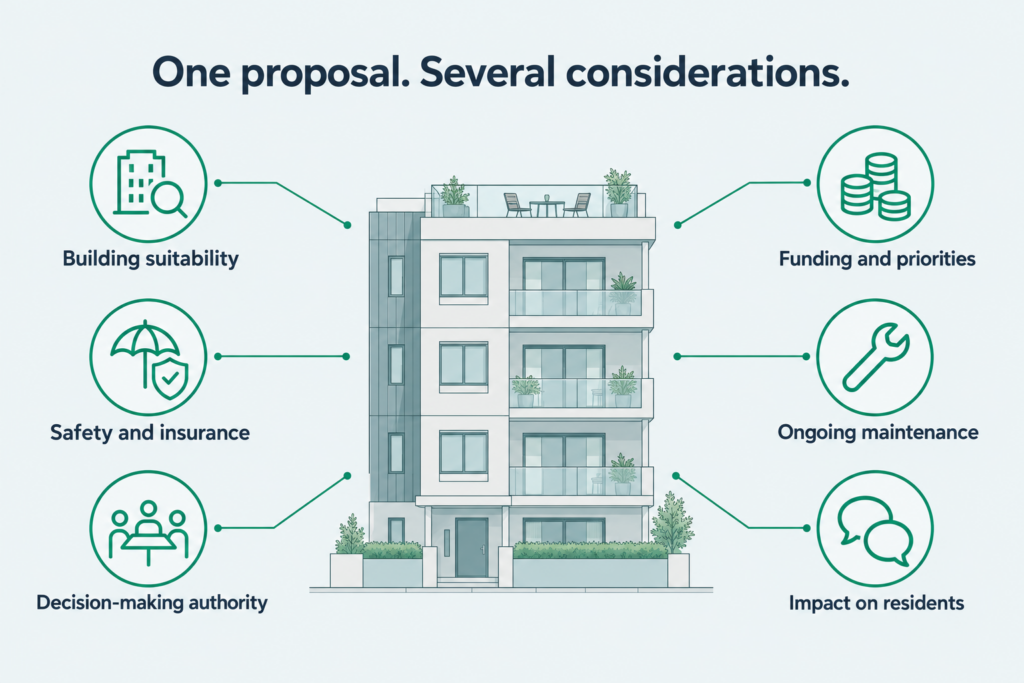
Experience changes what you see
Committee members who have dealt with leaks, insurance questions, competing maintenance priorities and difficult funding decisions may recognise implications that other owners have not yet encountered.
They may also know rrelevant history: previous advice about the roof, an earlier proposal, or upcoming expenditure that is already stretching the budget.
That doesn’t mean every refusal is well considered. Personal disagreements can influence committees, and a brief “no” does little to help an owner understand a decision.
But “they’re out to get me” can overlook a much more ordinary explanation: the body corporate committee decision is based on consideration of a lot more factors than immediately apparent.
A useful starting point is to ask what concerns informed the decision and whether there is relevant advice or background information.
Experienced committee may be thinking about far more than the proposal in front of them. Understanding those wider considerations can change how a decision looks.
This article provides general information only. It is not legal, financial, engineering or building advice. The circumstances of every body corporate are different. Obtain advice from an appropriately qualified professional where necessary.