

Insufficient body corporate sinking funds can be hidden within a healthy looking sinking fund balance. Context is needed to be able to judge.
Privacy note: This is an illustrative composite based on recurring issues seen in body corporate records. Figures and circumstances have been adapted and do not identify a particular scheme.
The Scenario
A buyer is considering an apartment in a 60-lot building registered under a building format plan. The scheme is regulated by the Accommodation Module.
The financial statements show approximately $400,000 in the sinking fund.
Viewed on its own, that balance appears reassuring. The body corporate has accumulated substantial
capital savings, and there is no immediately obvious deficit.
The levy history also looks reasonably stable. Over the previous four years, both administrative and sinking fund levies have increased slightly each year, broadly in line with inflation. There have been no dramatic levy increases and no recent special contributions.
Nothing in that initial financial snapshot suggests an immediate crisis.
However, a balance is only one part of the financial position. To understand whether $400,000 is adequate, it must be considered against the body corporate’s anticipated capital expenditure and its longer-term funding plan.
The first sign of a problem
The concern does not initially appear in the financial statements. It appears in the committee meeting minutes.
Over several meetings, the minutes refer to recurring problems with the building’s lifts. Owners have reported intermittent breakdowns, slow operation and increasing periods when one lift is unavailable.
At first, the references appear to describe routine maintenance issues. The committee discusses service visits, replacement parts and complaints from residents.
Further into the records, however, an inspection report provides a different perspective.
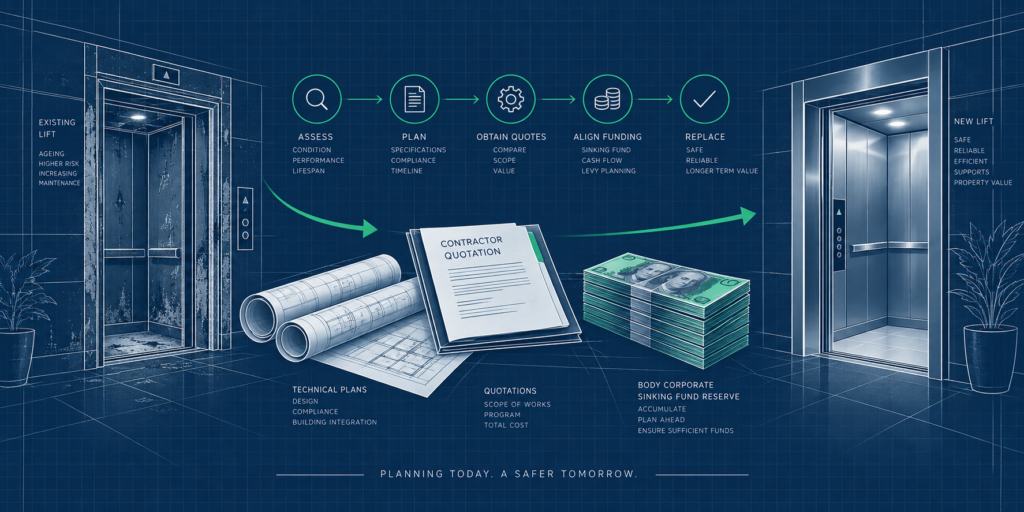
The specialist advises that the lifts are ageing, components are becoming increasingly difficult to source and ongoing repairs may no longer provide a reliable long-term solution. Replacement is recommended.
The preliminary estimate is approximately $1.4 million.
The apparently healthy $400,000 balance now needs to be viewed against a major capital project.
The apparent shortfall
- professional or consulting fees
- project management
- temporary access arrangements
- contingencies
- increases between the preliminary estimate and the final contract price
- other capital work that must still be funded.
The balance identifies the pressure - not the cause
The $400,000 balance is not, by itself, evidence that the body corporate has managed its finances well or poorly.
It identifies the amount held at a particular point in time. It does not explain:
- how much the body corporate was expected to have accumulated
- whether past contributions followed the sinking fund forecast
- what assumptions were made about the lifts
- whether other projects reduced the balance
- when the condition of the lifts became known
- whether the body corporate responded when the anticipated cost changed.
Those answers require the financial statements to be compared with the sinking fund forecasts, budgets, levy history, expenditure records, technical reports and meeting minutes.
The deeper problem appears in the sinking fund forecast
The current sinking fund forecast anticipated that the body corporate would have accumulated substantially more by this point.
A comparison of the recommended contributions with the contributions actually approved shows that the body corporate has consistently collected less than the forecast pathway required.
The annual shortfall may not have looked dramatic in isolation. Owners still received levy notices, levies still increased slightly each year and money continued to accumulate in the fund.
However, an increase in levies does not necessarily mean the body corporate is keeping pace with its future needs.
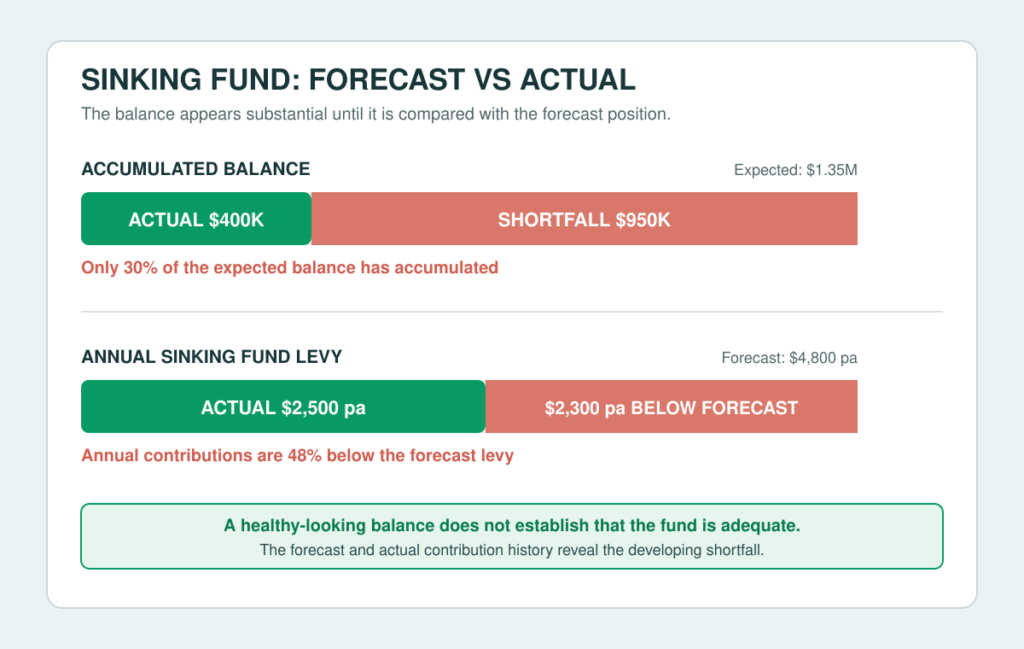
If contributions need to increase substantially to meet forecast expenditure, an annual increase broadly matching inflation may still leave the body corporate falling further behind. Repeated over several years, apparently modest differences can create a material funding gap.
The records also show some unbudgeted capital expenditure. That expenditure further reduced the available balance.
The shortfall has therefore not arisen from one event alone. It reflects a combination of:
- sinking fund contributions set below the forecast recommendations
- capital expenditure that was not adequately allowed for
- an ageing lift system approaching the end of its useful life
- a replacement estimate that is now far greater than the amount available.
What body corporate records should reveal
A records search should look beyond the current balance and establish as much of the following as has been discussed:
- when major lift refurbishment or replacement are scheduled in the sinking fund forecast
- what amount was originally allowed for the work
- whether annual sinking fund contributions followed the recommended accumulation pathway
- when actual and forecast contributions began to diverge
- what earlier capital expenditure reduced the available balance and whether it was budgeted
- whether the forecast was updated after significant expenditure
- how the committee responded to reports of recurring problems
- whether the $1.4 million figure is an estimate, quotation or approved contract price
- whether there are alternative options being considered
- whether the body corporate has approved a special contribution, loan or increased annual contributions
- whether the technical and funding decisions remain unresolved.
Three possible versions of the same headline
All three situations below could produce the same statement: the sinking fund cannot cover the lift replacement.
What the records reveal
* Contributions broadly followed the forecast, but the lifts deteriorated earlier than expected and costs increased substantially.
* Contributions were repeatedly set below clear forecast recommendations.
* Funds were used for urgent capital or defect work and the financial plan was promptly updated.
What it may mean
* Changed circumstances may explain the gap, but owners still face a significant funding decision.
* The shortfall may reflect a long-term patter of keeping levies lower by transferring cost to future owners.
* The low balance may be a consequent of necessary expenditure within an action recovery plan.
The headline is the same. The history, management response and level of uncertainty are not.
What happens next?
The body corporate needs both a technical decision and a funding decision.
It must first establish the appropriate scope of work. That may involve further investigation, detailed specifications, competitive quotations and professional advice.
It must then decide how the project will be funded. Options may include:
- a substantial special contribution
- a body corporate loan, with repayments funded through future contributions
- increased ongoing sinking fund contributions
- a combination of immediate and longer-term funding
- staging the work, where technically appropriate
- reviewing the timing and priority of other capital projects.
These are not interchangeable outcomes for a buyer.
A special contribution creates a defined near-term liability. A loan spreads the cost but adds interest and repayment obligations. Increased ongoing contributions affect future ownership costs. Deferral may reduce immediate pressure but increase the risks of breakdowns, service interruptions and further cost escalation.
What should concern a buyer most?
- specialist recommendations repeatedly deferred
- multiple estimates or quotations obtained without a decision
- the sinking fund forecast not updated after material changes
- owners voting down both the work and its funding
- increasing lift breakdowns or service interruptions
- no explanation of how other planned projects will be funded
- meeting minutes acknowledging urgency without recording a credible pathway forward.
Does the shortfall mean "do not buy"?
Not automatically.
A buyer may proceed with full knowledge of the likely contribution, negotiate the purchase price or decide that the financial risk does not suit their circumstances. That is a personal decision made with appropriate legal and financial advice.
The dangerous position is not necessarily buying into a scheme with a known funding requirement. It is buying without understanding the likely size, timing and uncertainty of that requirement.
The lesson from the case study
- the sinking fund forecast
- recommended and actual contributions
- the levy history
- earlier capital expenditure
- reports of lift problems
- specialist recommendations
- changing project costs
- decisions that had—or had not—been made.
The broader Blueprint pattern
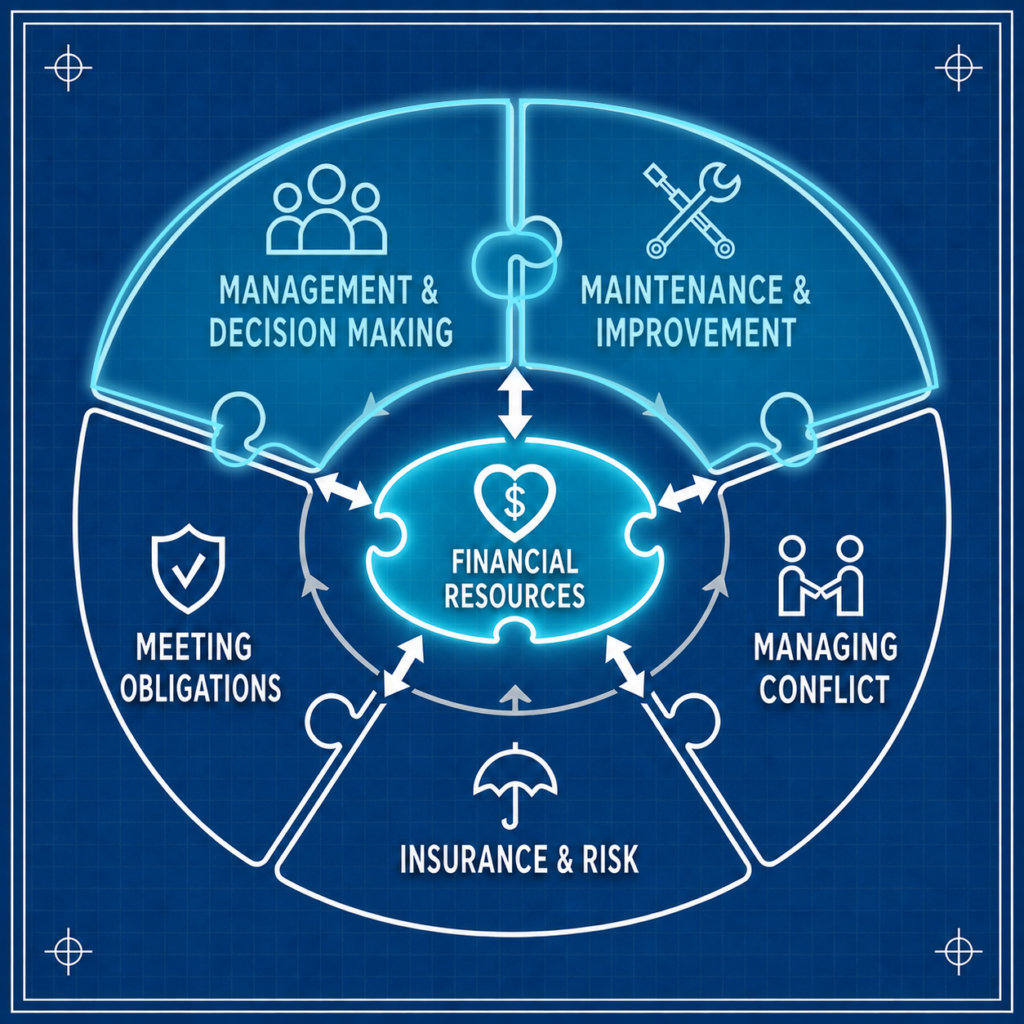
The lift problem begins in Maintenance & Improvement when an ageing asset requires attention.
It may impact Insurance & Risk if safety or property damage issues arise. Similarly Managing Obligations may be impacted if lift re- registration issues arise.
It passes through Management & Decision-Making as the committee investigates the problem, obtains advice and places proposals before owners.
It may move into Managing Conflict if owners disagree about the scope, timing or cost.
Ultimately, it returns to Financial Resources through increased ongoing contributions, a special levy, borrowing or a combination of funding measures.
The funding gap is therefore not an isolated number. It is the financial outcome of the building’s condition and the body corporate’s response over time.
The takeaway
An insufficient sinking fund is not, by itself, a diagnosis of poor management. It is evidence of a funding gap.
The records are needed to explain:
- how the gap arose
- whether it was reasonably foreseeable
- whether earlier contribution decisions contributed to it
- what other expenditure affected the balance
- whether the body corporate has a credible pathway to close it.
For a buyer, that distinction turns an apparently healthy balance—and then a frightening headline—into a risk that can be properly described, costed and considered. A fully informed decision can then be made.
This article provides general information only. It is not legal, financial, engineering or building advice. The circumstances of every body corporate are different. Obtain advice from an appropriately qualified professional where necessary.