

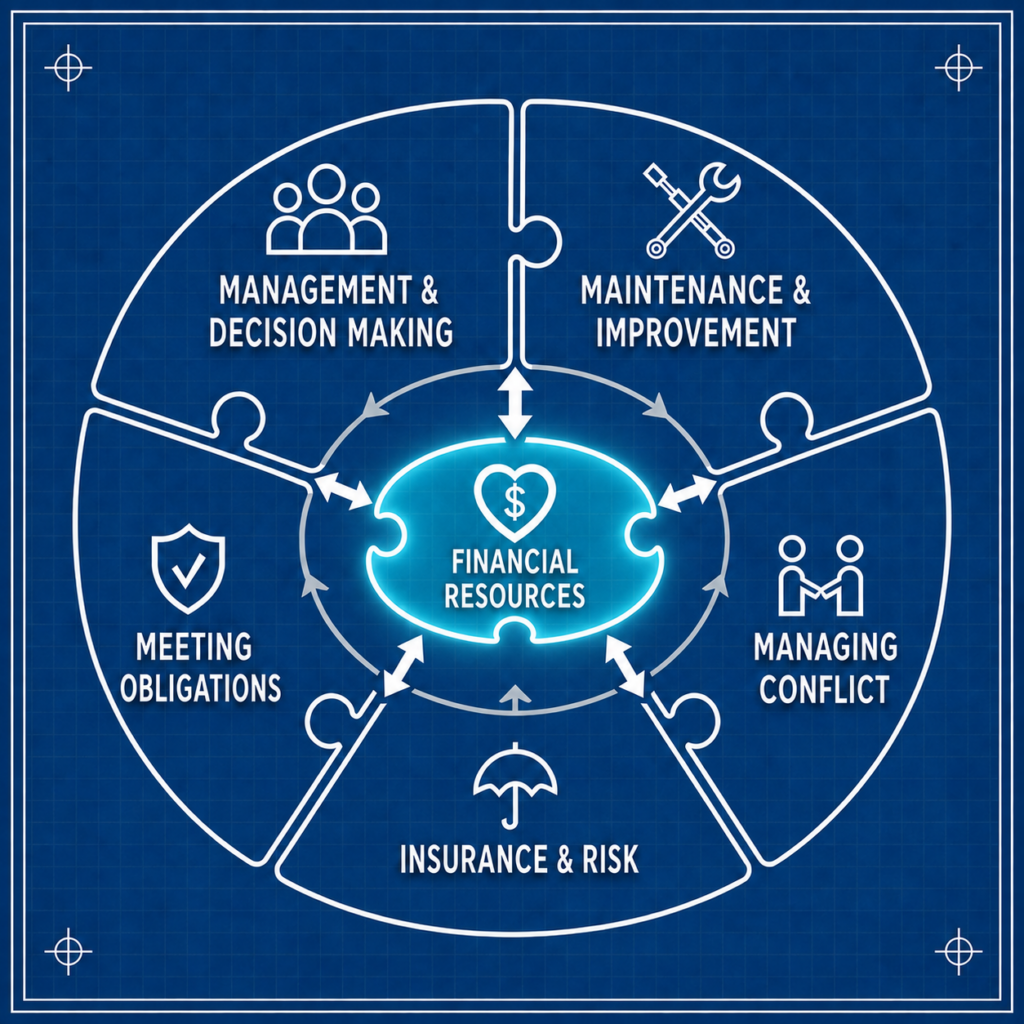
The number on the balance sheet is only useful when its compared with what the scheme needs to fund next.
A low body corporate sinking fund balance is often thought a problem as the figure is treated as a quick measure of financial health. A large balance does look reassuring and a small balance can seem risky. Unfortunately, the number by itself cannot answer whether a scheme is well funded.
A body corporate that has just completed a planned repaint may quite properly have a lower balance. Another scheme may hold a much larger amount but be approaching lift replacement, roofing work and concrete repairs that will cost far more. Context changes the meaning of the number.
The useful comparison is not simply “high or low”. It is: what does the scheme have, what does it need, when will it need it and how will the difference be funded?
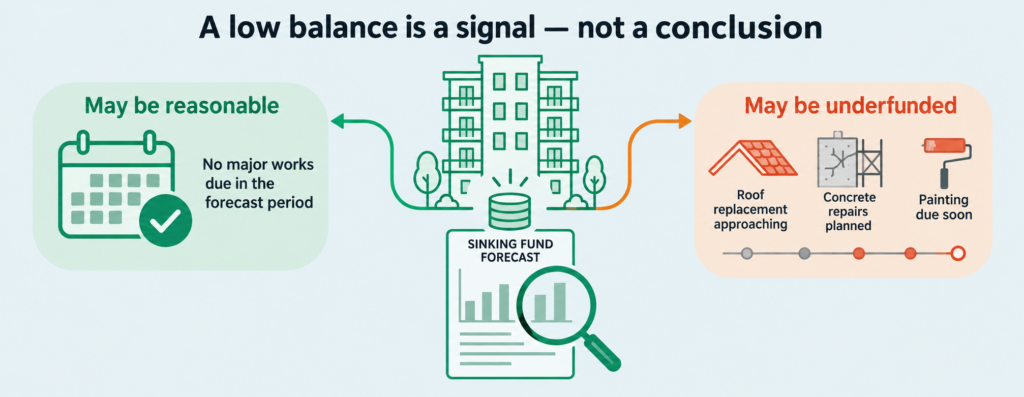
Low does not necessarily mean underfunded
A sinking fund balance is properly assessed against the scheme’s capital expenditure pathway – their sinking fund projections. A low body corporate sinking fund balance may be explainable where:
- major scheduled work has recently been completed
- the next project is several years away and planned contributions rebuild the balance in time
- the balance is low but the scheme has adopted an appropriate special contribution or funding plan to rebuild
- the body corporate is small and has correspondingly modest common property obligations.
Conversely, a substantial balance may still be inadequate where several costly projects are approaching, estimates are outdated or funds are already committed.
What does "underfunded" mean?
An underfunded sinking fund is not defined simply by a negative accounting balance. It describes a mismatch between the resources available—or expected to be available—and the capital expenditure the body corporate is likely to face.
Similarly a body corporate can have what appears to be a healthy balance but be underfunded when measured against the schemes capital needs.
The balance in the sinking fund itself is not the required measure. A more accurate measure is whether funds being collected will allow the scheme to meet its capital works requirements without additional funding.
The more accurate question: Can works be paid for, when due, without an unplanned financial shock to owners?
Why a sinking fund becomes "underfunded"
Contributions have been set too low
Owners may approve contributions below the level indicated by the scheme’s forward planning. The effect may not be visible immediately. It accumulates over time until a major project approaches and the gap can no longer be deferred.
Earlier expenditure was not incorporated into later planning
Funds may have been used for a legitimate urgent repair, defect rectification or other capital work. The difficulty arises when later budgets and forecasts continue as though the expenditure never happened.
Costs or timing have changed
Construction inflation, deterioration, expanded scopes and changed compliance requirements can make an older estimate unreliable. A project may also need to occur earlier than forecast.
Projects were omitted or underestimated
A forecast is only as useful as its scope and assumptions. Significant components may have been omitted, given unrealistic service lives or costed without sufficient understanding of their condition.
Work has been deferred
Deferral may temporarily preserve cash, but it does not necessarily remove the liability. In some cases deterioration increases the eventual cost.
What are the possible consequences?
- increased ongoing sinking fund contributions
- a special contribution
- borrowing money and funding repayments through future contributions
- staged or defered projects where that can safely and lawfully occur
- revised scopes or priorities
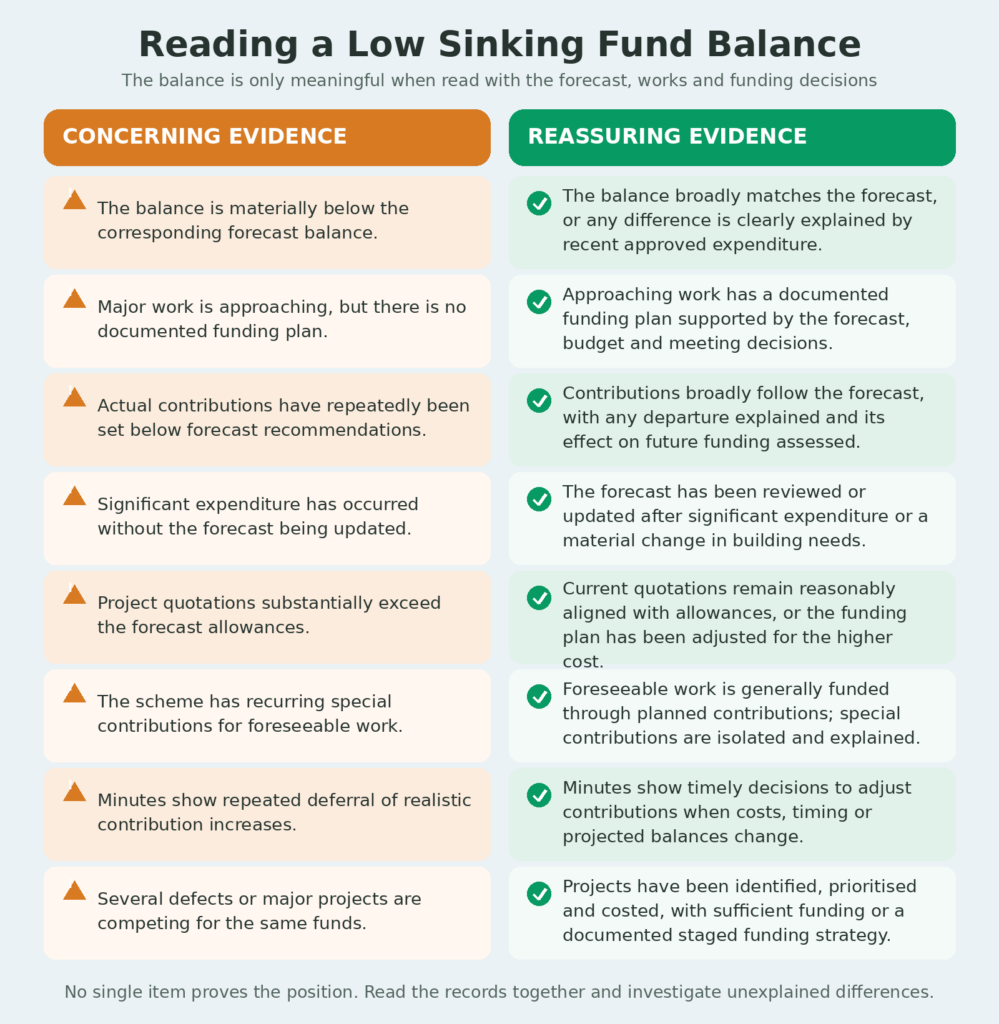
The sinking fund balance is the start of the investigation
Its not enough to simply say the sinking fund balance looks healthy. More context is needed to truly understand how much should be in the sinking fund.
To test whether a sinking fund is adequate, compare the actual balance and contributions with the schemes sinking fund forecast. Check whether the forecast has been followed by checking what has been spent and what remains planned.
The companion article “How to Check Whether a Body Corporate Sinking Fund Is Adequately Funded” sets out that process step by step.
The lift-replacement case study then demonstrates why an apparent shortfall can have several possible causes—and why the records around the number matter as much as the number itself.
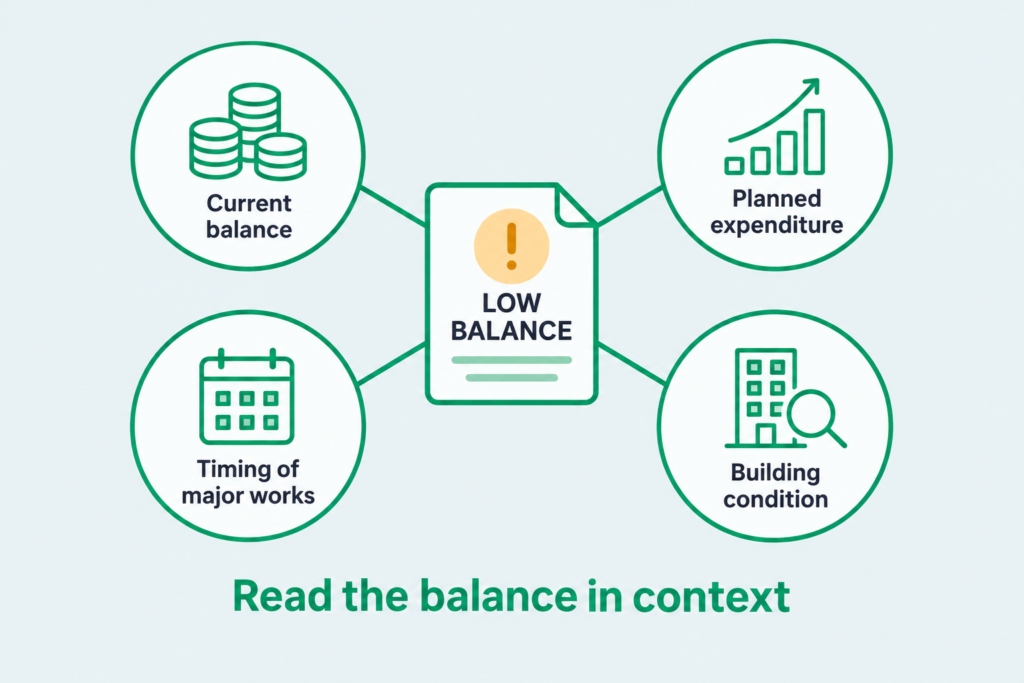
The Takeaway
A low sinking fund balance is not automatically bad, and a high balance is not automatically safe. The meaningful issue is adequacy: whether the scheme’s resources and collection plan align with its foreseeable capital obligations.
For a buyer, the risk is not simply inheriting a low balance. It is inheriting a funding gap that has not been recognised, explained or addressed, a gap they will have to help fill.